
It is late July and for many families the "summer holiday feeling" is finally in full swing. The sun is (hopefully) out, the school run is a distant memory and the pressure of packed lunches has finally lifted. However, as an anxiety specialist, I know that for parents of anxious children, there is often a low-level hum of dread beneath the surface. You know that September is coming.
You might already be seeing the early signs: a bit more irritability, trouble falling asleep or perhaps your child asking, "How many weeks until school starts?" every single morning. If this sounds familiar, you aren't alone. The back-to-school transition is one of the most significant annual "spikes" for childhood anxiety.
In my practice at the Mill Hill Therapy Hub, I spend a lot of time helping families navigate this exact window. The good news is that by taking small, proactive steps now, you can significantly lower the temperature for everyone come September.
Why the September "Spike" Happens
Transitions are hard for everyone, but for an anxious child, they can feel like standing at the edge of a cliff. The move from the safety and predictability of home back into the high-sensory, high-demand environment of school is a huge gear shift.
It isn't just about the work. It’s the new teacher, the different classroom layout, the changing friendship dynamics and the loss of the "safe base" (you). For some children, this anxiety manifests as something called EBSNA (Emotionally Based School Non-Attendance).

Understanding EBSNA
EBSNA is a term we use to describe children who find the emotional distress of attending school so overwhelming that they start to struggle with attendance. It isn't "naughtiness" or "refusal" in the traditional sense; it is a stress response.
When a child’s nervous system perceives school as a threat, their "fight, flight or freeze" response kicks in. If we understand this as an anxiety-driven issue rather than a behavioural one, we can approach it with the compassion and strategy it requires. If you are worried that your child's anxiety might lead to school avoidance, the "wait and see" approach usually isn't the best path. Starting the work in July and August is key.
What to Do Now: Your July and August Action Plan
You don't need to spend your entire summer holiday doing "school prep", that would be exhausting for everyone. Instead, I recommend a "little and often" approach. Here are the steps I suggest to parents in my therapy room:
1. Keep the "School Brain" Ticking Over (Gently)
You don't need to do hours of tutoring. However, keeping some tiny bits of routine can help. Perhaps it’s a "worry jar" in the kitchen where they can pop a note if a school thought bothers them. Or maybe it’s just keeping a semi-regular wake-up time so the shock of the 7:00 am alarm in September isn't quite so brutal.
2. Normalise the Conversation
Anxiety loves a vacuum. If we don't talk about school because we "don't want to ruin the holiday," the anxiety can grow in the dark. I suggest having "low-stakes" chats. Mention school in passing while you are doing something else, driving the car or washing up. "I wonder what books you'll get to read in your new classroom?" is much less threatening than a formal sit-down "talk" about their fears.

3. Practical "Exposure"
If your child is particularly anxious about the physical building, do some "drive-bys." Walk past the school gates on your way to the park. If the school is holding any summer events or if you can arrange a quick visit with the SENDCo or a teacher before term starts, take it. Familiarity is the enemy of anxiety.
4. Build a "Calm Kit"
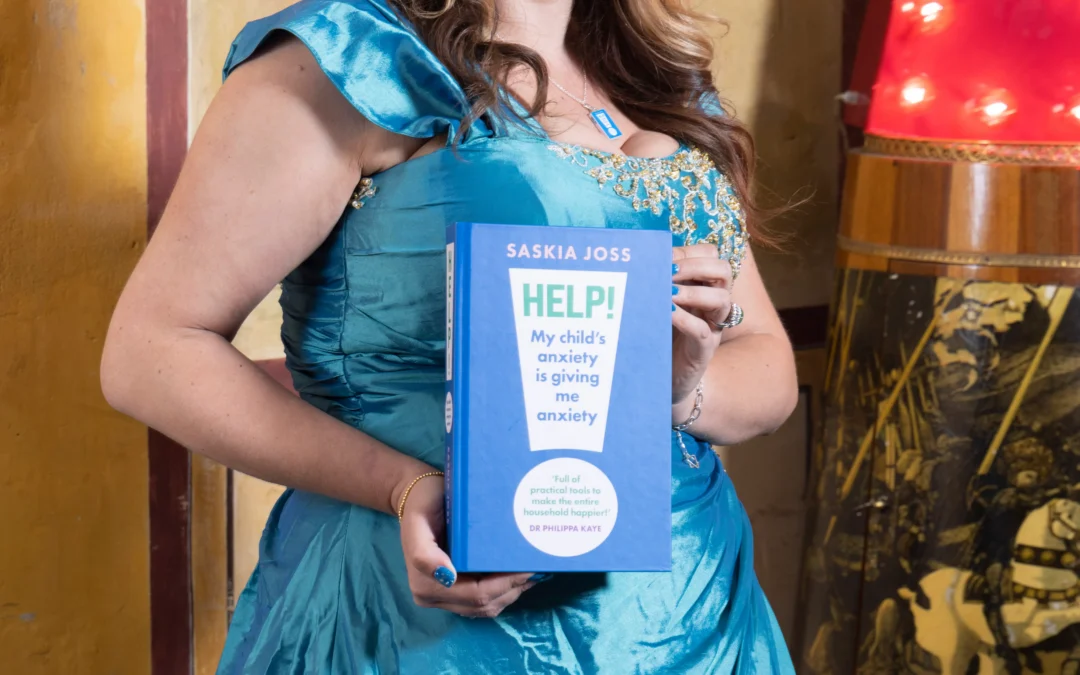
Over the summer, work with your child to identify what helps them feel safe. Is it a particular fidget toy? A "bravery stone" in their pocket? A specific breathing exercise? In my book, HELP! My child’s anxiety is giving me anxiety, I talk about how we can co-regulate with our children to build these toolkits together.
How I Can Support You
If you would like to hear more of my advice on this topic, I spoke with Giovanna Fletcher on her "Happy Mum, Happy Baby" Parenting SOS episode about easing back-to-school anxiety.
I work with many families who are in the thick of this right now. Based at the Mill Hill Therapy Hub on Sunbury Avenue, I offer one-to-one therapy for children (primary and young secondary age) to help them build resilience and coping strategies for these big transitions.
I also know that parents are often the ones carrying the heaviest load. That’s why I offer parenting support via phone calls, providing you with a space to offload and gain practical, specialist advice tailored to your child’s specific needs.
Beyond one-to-one work, I frequently deliver school talks for parents and staff. If you think your school community would benefit from a session on managing anxiety or understanding EBSNA, please do get in touch.

The Takeaway
The back-to-school period doesn't have to be a time of total crisis. By acknowledging the anxiety early, validating your child’s feelings and taking small steps toward September now, you are building a bridge for them to cross.
If you feel like you need more specialized help, you can find out more about my work and book a session through my website: www.saskiajosstherapy.co.uk.
If you would like to talk things through, you can also book a parenting support call here: www.calendly.com/saskiajosstherapy/30min.
Remember, you are your child's best advocate. Together, we can make this transition a little smoother.
About the Mill Hill Therapy Hub
The Mill Hill Therapy Hub is a dedicated space designed to feel safe and welcoming for children. Located on Sunbury Avenue, it provides a quiet, creative environment where children can express themselves through play, art and conversation.
